Punch Catamarans: A Legacy Reimagined with Versatility and Sustainability
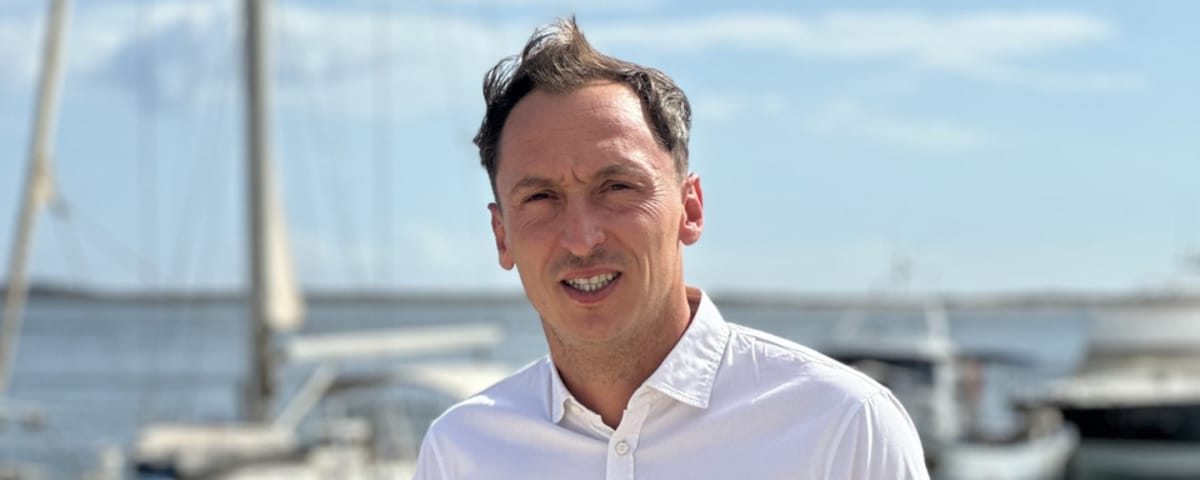
Julien Le Moigne Hernandez, now at the helm of Multicat Algarve, shares a captivating story of how a childhood memory sparked a revival of the iconic Punch catamarans. His journey began with family vacations in Martinique, where his uncle, Christian Hernandez, built the original Punch catamarans. A memorable first sailing experience on a Punch ignited a passion that would later lead him back to the world of boatbuilding.
After pursuing studies in surveying and architecture, Julien received a life-changing call from his uncle, Christian, who was then enjoying his retirement in the Algarve. Christian, along with Alain Mortain, one of the original Punch architects, had noticed a thriving online community of Punch enthusiasts. This inspired them to relaunch the brand, leading Christian to establish a shipyard in the Algarve. After constructing two boats, he sought a successor to continue the legacy. Julien, with his lifelong passion for boats, didn’t hesitate to take the reins.
A Philosophy of Versatility
Multicat Algarve’s construction philosophy centers around versatility. Eschewing molds, they employ a mixed-method approach, adapting to the specific needs of each project. Hulls are constructed using strip-planking, a technique that allows for refined shapes and high-performance mechanics. Developable sections are built with bio-sourced epoxy resin plywood or sandwich construction using recycled Airex foam and epoxy resin infusion.
“This approach offers almost infinite freedom to respond to each client’s request. Each program is unique, and this adaptability is part of the DNA of the shipyard and the Punch.”
This commitment to customization is a key strength, allowing them to tailor each catamaran to the client’s specific requirements.
A Range of Catamarans for Diverse Needs
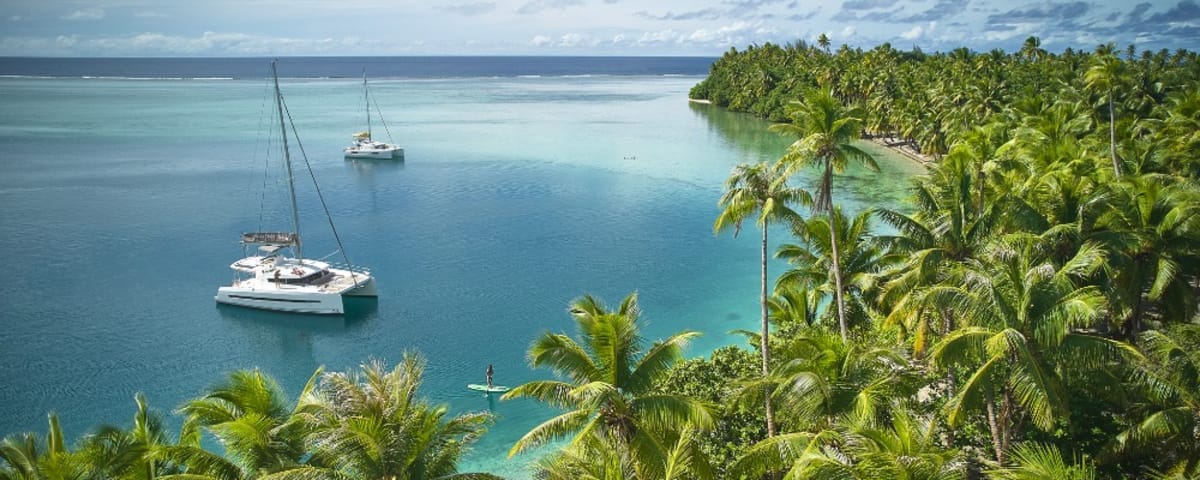
The current Punch catamaran range spans from 12.70 to 21.10 meters, with intermediate models at 13.70, 15.10, and 17.10 meters. These boats are available in day-charter, medium-charter, and long-charter versions, suitable for various applications, including private use and rental. The shipyard also welcomes requests for motor multihulls, both catamarans and trimarans.
Embracing Sustainability
Julien emphasizes the importance of environmental responsibility in the new Punch range. The shipyard is actively exploring bio-sourced resins, recycled foams, and hybrid or electric propulsion systems.
“Our generation has an essential role to play: we are working on bio-sourced resins, recycled foams, and of course on hybrid or electric motors.”
This commitment to sustainability reflects a growing trend in the nautical industry.
The Future of Nautical Travel
While acknowledging the exciting advancements in electric and zero-emission vessels, Julien believes that traditional sailing yachts will remain popular. He sees the future of nautical travel in the diversity of programs and the ability of shipyards to meet evolving customer needs. He notes a growing interest in electric propulsion, citing a study indicating that 54% of boat owners in the United States would consider this type of motorization. The industry is moving towards more ecological construction and operation, with a clear goal of achieving carbon neutrality.
A Rich History and a Promising Future
Since the creation of Multicap Caraïbes in 1987, 100 boats have been built, including around thirty Punch catamarans. The very first Punch, built for architect Philippe Harlé, is still sailing in the Antilles. Recent launches include 12.70 and 13.70-meter day-charter catamarans. Future projects include a 21.10-meter day-charter and a 13.70-meter Signature version with hybrid propulsion for a round-the-world voyage, both slated for completion in 2026. Despite their bespoke nature, Punch catamarans remain competitively priced compared to mass-produced models.
Looking Ahead
Julien’s most recent sailing experience was in Martinique with family, renewing his wedding vows. He eagerly anticipates the transatlantic voyage on the Punch 21.10, destined for charter service in the Antilles, a journey he hopes to share with Christian Hernandez and the architects.
Enjoyed this post by Thibault Helle? Subscribe for more insights and updates straight from the source.