The Unexpected History and Enduring Appeal of Bateaux-Mouches
Contrary to what their name might suggest, bateaux-mouches, those iconic Parisian riverboats, have nothing to do with insects. The term actually originates from the Mouche district in Lyon, France, where these boats were manufactured in the 19th century.
From Lyon to the Seine: A Journey Through Time
Initially, these steam-powered vessels primarily served to transport passengers and goods on the Rhône and Saône rivers. They were known for being robust, maneuverable, and affordable, making them ideal for river transport. Their big break came during the 1867 Universal Exposition in Paris. A special line was created to showcase the Seine to visitors from around the world. The success was immediate. These peculiar boats, nicknamed “mouches” in a nod to their Lyonnaise origins, captivated audiences with their modernity.
A Revival Story: From Obscurity to Tourist Icon
After the excitement of the Universal Expositions faded, bateaux-mouches gradually fell into obscurity in the early 20th century. Competition from trams and the Paris Metro brought an end to these river excursions. It wasn’t until the end of World War II that interest in these cruises was revived, this time with a new perspective.
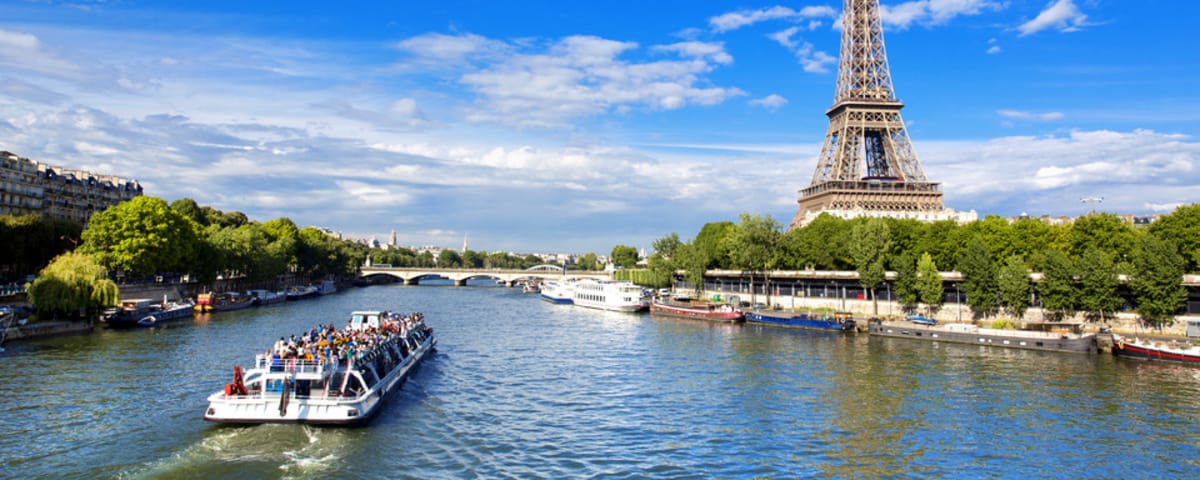
In 1949, Jean Bruel, a visionary entrepreneur, decided to revive the idea of Seine River cruises. He acquired an old, disused boat, refurbished it, and founded the “Compagnie des Bateaux-Mouches.” The formula was simple: a narrated tour, stunning views of Paris’s monuments, and a touch of retro charm. The success was immediate.
“The bateaux-mouches offer a unique perspective on Paris, blending history, elegance, and romance on the water.”
Beyond Paris: Global Adventures and Tragic Setbacks
While a Parisian symbol, the bateau-mouche has also found success in other locations. In Montreal, the idea took hold in 1992, the city’s 350th anniversary. A bateau-mouche was built directly in the Old Port. With its two decks and removable glass roof, it carries up to 190 passengers for five cruises a day, both day and night, on the St. Lawrence River. Its shallow draft allows it to navigate areas inaccessible to conventional boats, offering spectacular views of the Lachine Canal, Habitat 67, and the Jacques Cartier Bridge. Over a million visitors have boarded, and over 400,000 meals have been served during dinner cruises.
The story was more turbulent in Rio de Janeiro. In the 1980s, a bateau-mouche line operated in Guanabara Bay. However, on December 31, 1988, the sinking of the Bateau-Mouche IV resulted in 55 fatalities and the permanent closure of the company, leaving a tragic legacy.
An Enduring Symbol of Paris
Despite its international ventures, the bateau-mouche remains a Parisian icon. Its silhouette is now part of the landscape, and it is not only a tourist attraction but also an element of the capital’s living heritage.
During the opening ceremony of the Paris 2024 Olympic Games, some bateaux-mouches were featured. Among them, L’Espoir, carrying the American delegation, participated in the grand parade on the Seine, further solidifying its role as a Parisian symbol.
Over time, these boats have become more than just a means of transport or an attraction: they embody a Parisian way of life, blending history, elegance, and romance on the water. A true floating emblem that continues, generation after generation, to sail dreams on the Seine.
Enjoyed this post by Thibault Helle? Subscribe for more insights and updates straight from the source.