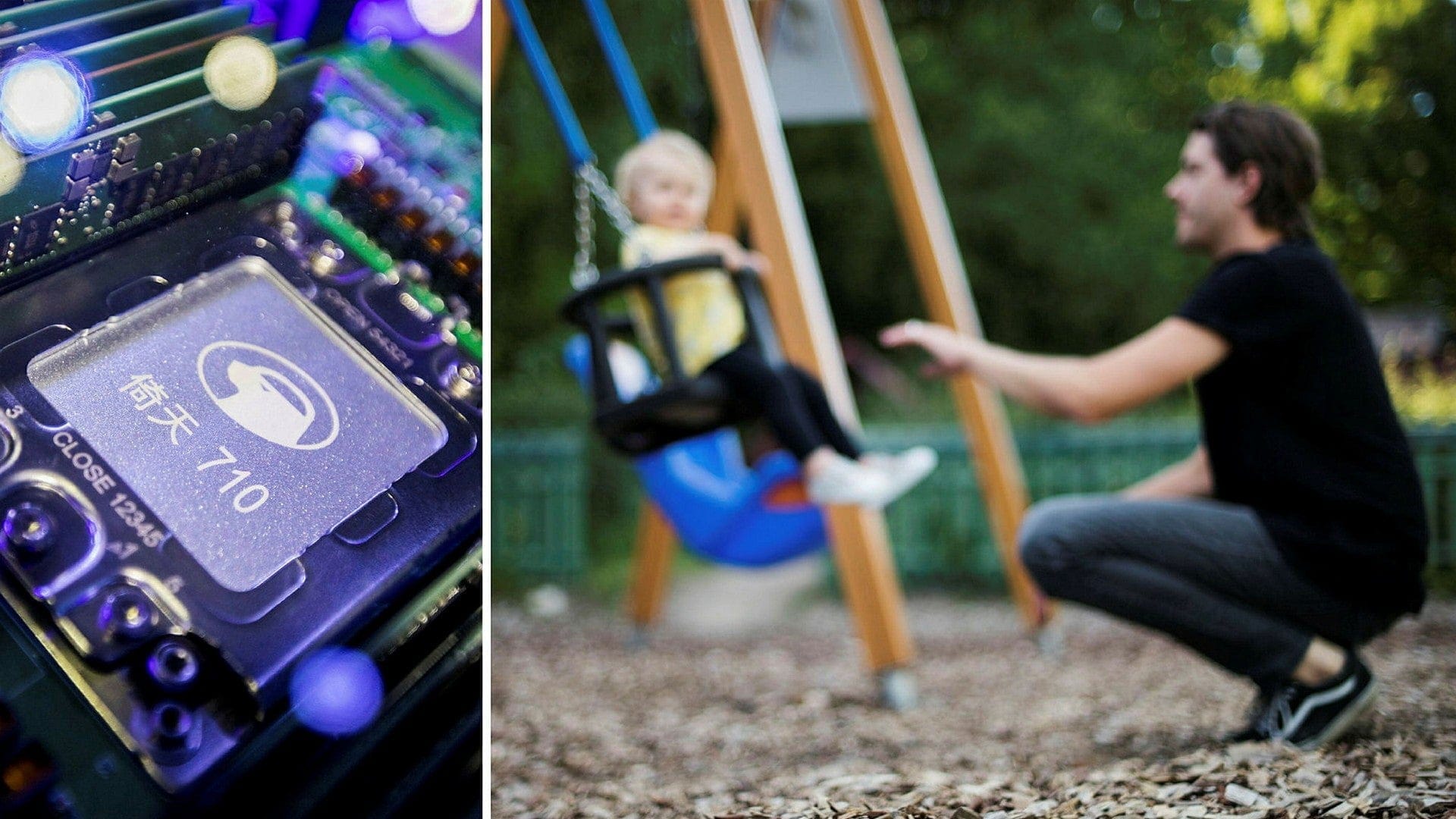
The Value of Humanity Beyond Intelligence
Overheard on a train: “The universe is infinite, so it’s highly probable that there’s life out there.” A pause, then: “And since they haven’t contacted us, it’s likely intelligent life.” A clever formulation that puts intelligence into a broader context.
Intelligence itself has been a focal point as the understanding of AI’s significance has grown. But perhaps the emphasis on intelligence has created skewed proportions, especially within the understanding of general AI, where discussions about the human-like exist.
Often, an implicit connection between intelligence and humanity is assumed. The more intelligent AI is, the more human it is. Is this accurate?
For a long time, the power of computers and AI has been tested by their ability to defeat humans in chess. Humanity, in general, is now surpassed in this area. But does this teach us anything about the connection between intelligence and humanity?
One of my sons always wins at chess against me. The other son usually wins. But this hardly means that one is more human than the other.
And I wouldn’t be a better father if I won against both of them. It would bring out other, less desirable qualities in me, which I would justify with: “Well, I’m only human.”
The analogy may be simple, but there’s a difference between storage capacity and knowledge, just as there is between information and understanding, and between knowing and wisdom.
Here also comes the most important question: how do we value the human? Based on abilities, like intelligence, or on other grounds?
Through a poetic analogy, a religious figure focuses on the core of humanity. He says: “Are not two sparrows sold for a penny? And yet not one of them will fall to the ground apart from your Father’s will. And even the hairs of your head are all numbered. So do not be afraid; you are worth more than many sparrows.”
In a certain worldview, a human’s “intrinsic value” comes first. A person’s abilities do not give them value. Value is built on an absolute foundation. Humans are referred to as being made in a certain image.
Human value exists before we start thinking about characteristics and abilities. Inviolable. The same reasoning exists in many thought systems around the world, as well as in the declaration of human rights. The first article reads: “All human beings are born free and equal in dignity and rights. They are endowed with reason and conscience and should act towards one another in a spirit of brotherhood.”
Freedom, value, and rights are interconnected, as are reason, conscience, and community. A broad description of what it is to be human, and of what we can expect from each other.
Here, many traits emerge that describe what it is to be human far more than intelligence: enthusiasm, indecisiveness, fear and courage, altruism in conflict with egoism, the ability to regret, or the inability to learn. The ability to cry and comfort.
Vulnerable contradiction is much more important than pure intelligence to capture the greatness of humanity.
But first and foremost comes value. The inviolable. Not just mine, but also yours. Not just the neighbors’, but also those who are far away. Not just those who are profitable, but also those who are broken – and many find both success and failure in their life stories.
Intelligent life on Earth? In the universe? Perhaps. But what I know and am thankful for above all is that there is human life on Earth. Infinitely valuable, each and every one, and all together.
Enjoyed this post by Thibault Helle? Subscribe for more insights and updates straight from the source.