The End of Life of Boats: From Blind Spot to Industrial Reality
The boating industry has long grappled with a silent contradiction: designing hulls capable of lasting decades without truly anticipating their fate once they reach the end of their lifespan. This situation is no longer sustainable. Abandoned boats are no longer an abstract symbol, but a very real problem.
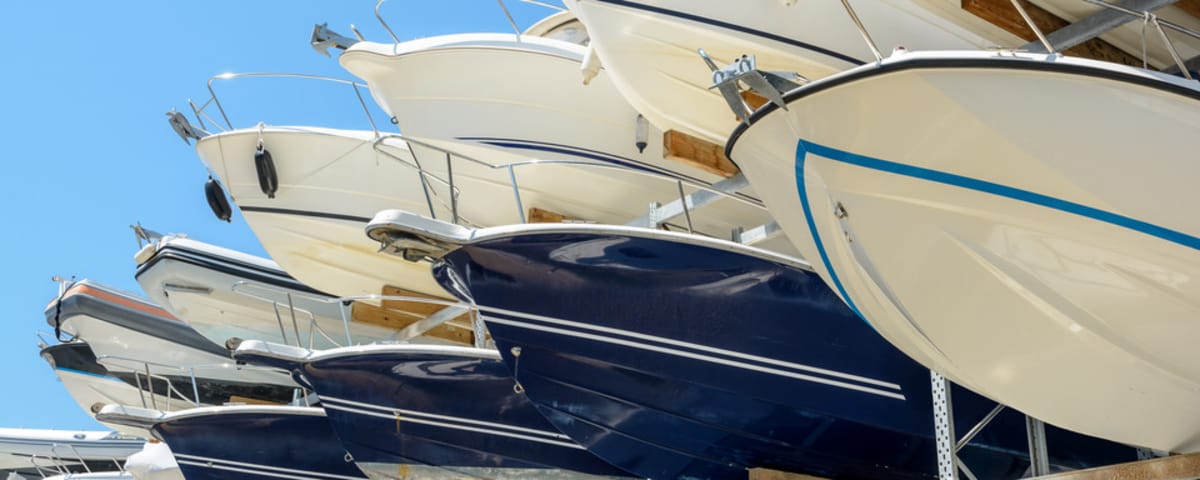
In France, a structured dismantling sector has existed since 2019 within the framework of extended producer responsibility, with support for boats subject to eligibility conditions. Between September 2019 and April 2023, more than 7,800 units were dismantled, and 74% of the tonnage from these operations found a recovery pathway.
A further milestone has now been reached. It is no longer just a matter of eliminating a troublesome wreck, but of industrializing real material outlets. Figures published by the sector reflect this change of scale, with 4,344 tons of boats collected and dismantled in 2024, with an average age of 42 years. Exactly the generation that enshrined the reign of all-polyester construction.
This reflection goes far beyond national borders. At the European level, work is increasing to structure the end-of-life management of pleasure boats, with a clear objective: to align collection, treatment, and eco-design across the continent. As long as the hull remained out of sight, polyester retained an overwhelming advantage. Now that end-of-life is becoming a concrete issue, the balance is beginning to shift.
Why Polyester Still Dominates
Declaring that polyester is outdated is often an oversimplification. For mass production, the industrial ecosystem remains extremely robust. Raw materials are available, processes are mastered, the workforce is trained, and repairs are possible in almost all navigation basins. The economic equation remains difficult to beat for widely distributed boats.
However, two weaknesses are becoming increasingly apparent.
The first concerns the workshop. Unsaturated polyester is historically linked to the use of styrene, the exposure to which poses occupational health issues. Occupational exposure limits vary greatly from country to country, including in Europe, illustrating the persistent sensitivity of the subject.
The second is at the end-of-life stage. Properly recycling a classic thermoset composite remains complex. Solutions exist, but are more of a compromise than true closed loops: grinding for fillers, energy recovery, or thermal and chemical treatments that have yet to demonstrate their economic robustness on a large scale. A structural constraint weighs heavily: once polymerized, a thermoset cannot be melted down like a metal.
It is precisely on this point that new materials are shifting the debate, not by promising a revolutionary hull, but by rethinking the very logic of end-of-life.
Thermoplastics and Reversible Chemistry: A Change of Matrix More Than of Fiber
The most profound breakthrough is not the appearance of exotic fibers, but the evolution of the matrix. With thermoplastic composites, the objective is to design a hull capable of becoming raw material again, through mechanical or chemical recycling.
Recent studies comparing hulls made from liquid acrylic thermoplastic resins to more traditional epoxy solutions show that the carbon impact over the entire life cycle depends closely on the end-of-life scenario. When recycling is actually carried out, the potential benefit becomes significant.
In practice, this does not mean an immediate shift across the entire market. The first applications will concern segments where end-of-life is heavily regulated, where production is sufficiently standardized, and where the value of the recovered material allows for the financing of a credible industrial loop.
One factor remains central and often underestimated: repairability. Boating is not aeronautics. A material that requires rare, complex, or impossible repairs to carry out outside of a strict industrial framework is unlikely to become widespread, regardless of its environmental promise.
Plant Fibers and Hybrid Structures: A Gradual Evolution
Another area of transformation is more immediately noticeable for boaters: modifying part of the material content without disrupting the entire industrial chain. Plant fibers, especially flax, are progressing on certain elements. They are driven by a dual argument: a potentially more favorable impact on certain environmental metrics and interesting mechanical properties on well-targeted parts, provided that natural variability and sensitivity to humidity are controlled.
Syntheses of scientific work show a clear expansion of research and applications, while recalling that the final balance depends heavily on the matrix used and the scope of analysis retained.
In the same spirit, sandwich cores are evolving. Foams from recycled streams are gaining ground, as are architectures designed from the outset to be dismantled or sorted more efficiently at the end of their life. These advances are less spectacular than a completely redesigned hull, but often faster to deploy because they do not involve a complete overhaul of existing industrial processes.
Caution is still advised. A more virtuous fiber does not automatically make a boat more virtuous. A composite remains a composite and, without a clear organization of end-of-life, the gain remains partial. This is the challenge of public roadmaps that now link the nautical industry, boating, and waste management, favoring eco-design rather than simple environmental labeling.
Radical Break or Gradual Shift?
Polyester will not disappear abruptly. It will gradually recede, by segments, by types of boats, and under the combined effect of regulatory and industrial constraints. The first steps will involve partial substitutions, assemblies better designed to be separated, less emissive resins, and cleaner processes.
It is only in a second phase, where end-of-life is actually taken care of, that thermoplastics and their associated recycling streams can become a standard on certain ranges.
The shift will hinge on a very marine equation: performance, repairability, cost, and verifiable end-of-life. The day a shipyard can demonstrate, with evidence, how a hull reintegrates a credible material loop without making the boat more fragile, more expensive to maintain, or impossible to repair, polyester will cease to be the default solution.
Enjoyed this post by Thibault Helle? Subscribe for more insights and updates straight from the source.