Used Boat Market Shifts: Insights for 2026
After years of high demand exceeding supply, the used boat market is entering a more balanced phase. The slowdown in new boat sales has naturally increased the visibility of used boats. Boats are staying on the market longer, listings are increasing, and buyers no longer feel pressured to make hasty decisions.
Changing Buyer Behavior
This shift is profoundly changing buyer behavior. Boaters are visiting more boats, comparing histories, requesting more detailed inspections, and are more willing to pass on a boat that doesn’t perfectly match their needs. For the first time in a while, the buyer is taking control, driven by discernment rather than mere opportunism.
This environment particularly benefits boaters who know what they’re looking for – those with a clear plan, a defined cruising area, and a realistic understanding of their overall budget. Conversely, it disadvantages sellers who were relying solely on scarcity or inflated prices from past market conditions.
Most Sought-After Models in 2026
In 2026, the most sought-after boats aren’t necessarily the newest or most spectacular. The market favors proven, well-known, and widely distributed models with documented reliability and manageable maintenance.
- Monohull Cruisers: Cruising monohull sailboats between 10 and 12 meters remain at the heart of demand. This size offers a desirable compromise between autonomy, comfort, and operating costs. It’s suitable for couples or families, offers reasonable mooring solutions, and maintains versatility. Widely produced series retain a significant advantage here, as they offer reassurance through parts availability, technical knowledge, and ease of resale.
- Cruising Multihulls: Intermediate-sized cruising multihulls continue to attract interest. Many boaters transition to ownership after chartering and seek a simpler, sometimes older, catamaran that offers volume, stability, and a good quality of life onboard. Demand focuses on well-maintained units without poorly integrated equipment and with a clear history.
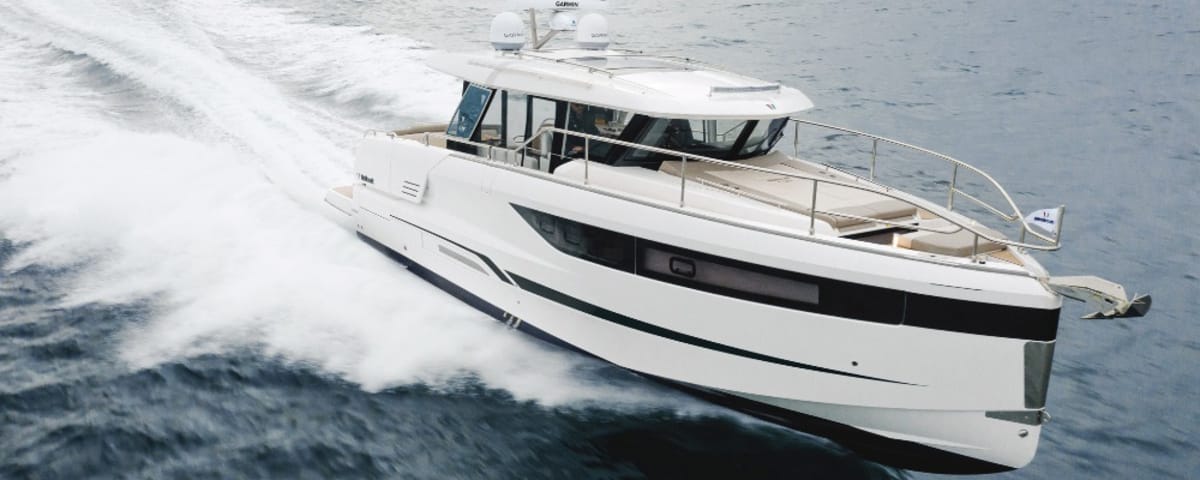
- Powerboats: On the powerboat side, habitable motorboats and well-designed outboard units, around 7 to 11 meters, retain strong appeal. They cater to more spontaneous, frequent boating with a strong family focus. Again, simplicity and reliability take precedence over sophistication.
In all cases, one criterion dominates: the ability to sail or cruise immediately without significant short-term refit work.
The Big Trend of 2026: The Ready-to-Sail Boat
The used boat market in 2026 highlights a clear trend: ready-to-go boats sell better, sometimes for more, and, most importantly, more reliably and quickly. Conversely, units listed at low prices but requiring significant work stay on the market longer and often end up being heavily renegotiated.
“A boat that is inexpensive to purchase can become very costly in the first season if work piles up.”
This shift reflects a growing awareness. Replacing a tired engine, structural repairs, end-of-life rigging, or obsolete electronics can quickly exceed the savings made on the purchase price.
Conversely, a well-maintained, documented boat with coherent and recent equipment allows for immediate sailing and spreading out improvements over time. The overall cost, over several seasons, often becomes more favorable, even if the initial price is higher.
Buying for Price and Regretting It: Common Scenarios
Marine surveyors and brokers describe recurring patterns each year. Boaters attracted by a very appealing listing discover a more complex reality afterward.
- Mechanical Issues: An engine may run fine during a visit without being in good condition. Lack of maintenance history, advanced corrosion, faulty cooling, or poor installation can lead to a significant overhaul, sometimes in the first season.
- Structural Problems: Osmosis, deck cracks, fatigued hulls, or partially repaired stringers are costly and time-consuming defects. They immobilize the boat and turn a sailing season into a refit season.
- Equipment Deficiencies: A boat may seem well-equipped on paper but hide an incoherent electrical installation, end-of-life batteries, or systems added without an overall vision. Again, the bill – a hefty one – rises quickly.
In all these cases, the mistake isn’t seeking a good price but underestimating the real cost of the boat project.
How to Make a Financially Sound Purchase in 2026
Buying intelligently in 2026 isn’t about targeting the lowest price but evaluating the balance between purchase price, the boat’s actual condition, and intended use. A well-chosen boat is one that matches the owner’s plan, available time, and ability to manage maintenance.
Negotiation is regaining its place, but it’s built on concrete elements: a detailed survey, precise quotes, and a realistic work schedule. In a more open market, these arguments are now heard.
It’s also necessary to accept an idea that’s sometimes difficult for a rational buyer: the perfect boat at a bargain price rarely exists. Conversely, a coherent, sound, and suitable boat, even slightly above the initial budget, can prove to be the best decision over several years.
Finally, one criterion is becoming increasingly important: the boat’s long-term durability. Repairability, material quality, and ease of maintenance are all elements that now influence a unit’s real value, well beyond its age or appearance.
Why 2026 is a Good Year to Buy
The used boat market in 2026 offers a rare advantage: choice. Choosing without pressure, visiting without urgency, negotiating without confrontation. This freedom restores meaning to buying a boat, which remains, above all, a sailing and enjoyment project.
The conditions are right to buy better, provided you accept a simple rule: you don’t buy a boat to beat the market but to sail. The best purchase is the one that allows you to take to the sea quickly, serenely, with a boat that is understood, embraced, and suitable. The rest is just a short-term calculation.
Enjoyed this post by Thibault Helle? Subscribe for more insights and updates straight from the source.