Viscaria Mine: A Green Copper Revolution in the Arctic
Published: November 5, 2025, 15:42
In the heart of Norrbotten, Sweden, a copper mine is poised to redefine sustainable mining practices. The Viscaria mine, powered by fossil-free electricity from hydro and wind power, and fueled by HVO biofuel, is setting a new standard for climate-efficient copper production. Its strategic location next to the electrified Malmbanan railway ensures fossil-free transport to shipping ports, positioning Viscaria as a global leader in environmentally responsible copper mining.
Europe’s ambition to reduce copper imports and achieve greater independence is driving the demand for domestically produced strategic metals and minerals. Copper, an irreplaceable metal, is central to technological advancements, defense production, and electrification. Viscaria mine, situated in the Kiruna mining cluster, is ready to meet this growing need.
The EU has recognized copper as a strategic resource under the Critical Raw Materials Act (CRMA). By reopening the Viscaria mine, Sweden and Europe can decrease their reliance on imports while increasing access to responsibly produced copper, with a focus on minimizing climate impact and maximizing resource efficiency.
The mine’s proximity to the Malmbanan railway, connecting Swedish ports in the southeast with Narvik, Norway, in the northwest, provides access to a fully electrified transport link for exporting copper concentrate. This translates to shorter distances and lower emissions compared to more remote copper mines.
Green Goals and Sustainable Operations
The green infrastructure of northern Sweden is crucial to Viscaria’s goal of becoming one of the world’s most climate-efficient copper mines. The company is currently the only mining company in Sweden that powers its construction machinery with 100 percent HVO fuel, which is both fossil-free and renewable. When production begins in 2027, the company will combine electrified equipment with fossil-free fuels for the remaining operations.
A power connection agreement was signed with Vattenfall Eldistribution on June 10, securing a capacity of 45 megawatts of fossil-free electricity for the mine. The electricity will come from both hydro and wind power, and Viscaria requires origin labeling and consideration of biodiversity when purchasing electricity. Vattenfall Eldistribution is also building a new substation on the site, with a voltage level of 150kV, which will deliver electricity from hydropower directly to Viscaria’s facility.
Wind Power Integration
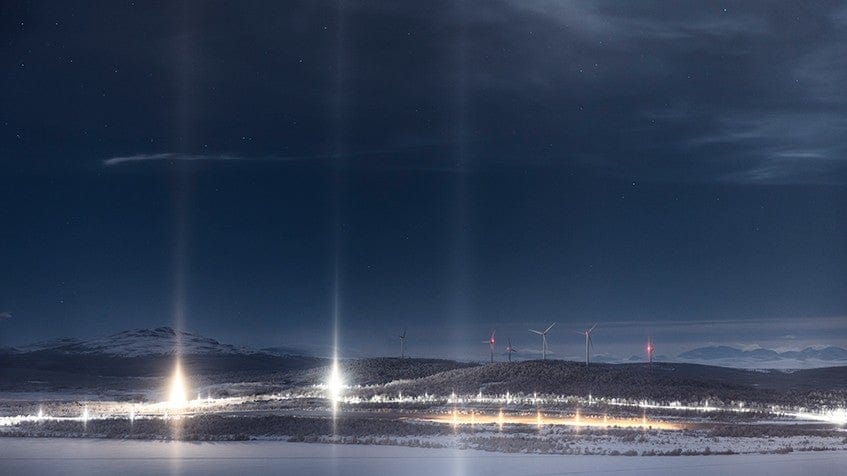
Viscaria has also acquired all six wind turbines in its subsidiary, Viscaria Vind AB. These turbines are expected to generate up to 10 GWh of fossil-free electricity per year, further strengthening Viscaria’s commitment to sustainable and self-sufficient operations.
When Viscaria begins operations in 2027, its goal is to operate a responsible mining business with a low climate footprint, from extraction to transport. The mine will produce approximately 26,000 tons of copper per year, equivalent to about five percent of Europe’s total needs. With modern technology, local knowledge, and respect for the environment, Viscaria is paving the way for how future copper can be produced sustainably in northern Sweden.
Unique Transport Solutions
Viscaria has secured ore wagons from Kiruna Wagon to deliver copper and other metals from the processing plant. The route to Narvik is 170 kilometers, and to the Swedish coast, it is 400 kilometers, meaning that trains can run fossil-free on the Malmbanan. This is unique because new mines are often established in remote areas where copper often has a more winding path and is fraught with questions about social and environmental sustainability.
This article was produced by Brand Studio in collaboration with Viscaria.
Enjoyed this post by Thibault Helle? Subscribe for more insights and updates straight from the source.