Preparing Your Boat for Winter: Insights for a Smooth Spring Launch
Beyond the technical aspects of winterizing a boat lies a mindset passed down from one boater to another: treating your vessel as a trusted companion deserving of a restful break. And a well-prepared break, at that.
The Cost of Winter: Investing in Peace of Mind
Preparing a boat for winter goes beyond simply closing a porthole and throwing on a cover. Whether you opt for dry storage, dockside mooring, or engine maintenance, the cost will vary depending on the size of your boat and the services you choose. However, the comparison is clear: a few hundred euros invested now can often prevent thousands in repairs come spring.
As seasoned boaters in shipyards often say, “It’s better to pay to prevent than to pay to repair.” Those who have experienced a pump cracked by frost or a fuel tank infested with bacteria know that winterizing is not a luxury—it’s insurance!
Dry Dock vs. Afloat: A Strategic and Geographic Choice
The big question resurfaces every fall: haul the boat out or leave it in the water?
In the Mediterranean, the mild climate encourages many owners to opt for afloat winter storage in a sheltered basin, provided they can check on it after strong winds.
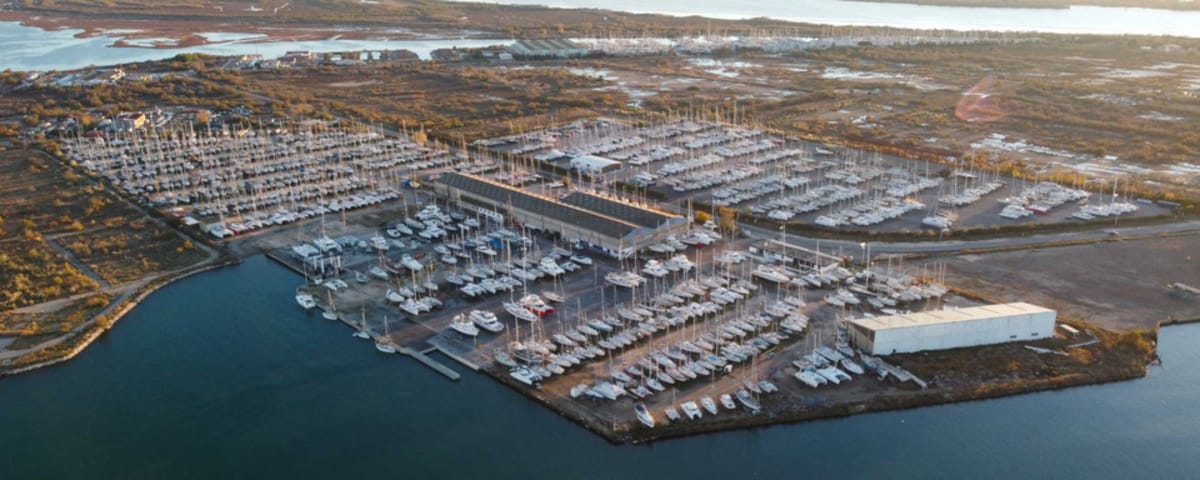
On the Atlantic coast, however, the swell, cold, and successive gales tip the balance toward dry storage. On land, the boat suffers less, and maintenance is simpler. Boaters who don’t live near their home port especially appreciate the peace of mind: knowing their boat rests securely on supports, under surveillance, is one of winter’s quiet pleasures.
Ultimately, there’s no one-size-fits-all answer. It boils down to one question: if the weather forecast predicts a serious gale, can you be on the dock that day? If not, dry storage is often the obvious choice.
The Engine: No Room for Compromise
If there’s one area where compromise is unacceptable, it’s the engine. Draining a still-warm engine, replacing filters, protecting the water circuit—these steps guarantee a smooth restart in the spring.
The same goes for fuel tanks, which should be filled to prevent condensation, and batteries, which should be isolated or removed depending on the situation. Mechanics on the docks offer one piece of advice: never let an engine rest with used oil. “It’s like sleeping outside in wet clothes,” one jokes. The message is clear.
Hull, Fresh Water, Interior: The Invisible Fronts of Winter
Once the mechanics are in order, winterizing involves three key areas: the hull, the water systems, and the interior.
A good hull rinse, early antifouling, and inspection of anodes and appendages—whether in the Mediterranean or the Atlantic—help eliminate salt, algae, and deposits that accumulate more than you might think. Fresh water systems must be completely drained. A single liter of water left in a bend can crack a pipe during a cold night.
Inside, the goal is to combat humidity. Raise the cushions, ventilate, and clean. Some boaters even install dehumidifiers. They know that a boat that smells musty in the spring rarely holds a pleasant surprise.
Ventilation plays a crucial role here. Many shipyards that offer winterizing packages include regular ventilation of the boats under their care.
Mediterranean vs. Atlantic: Same Actions, Different Priorities
A boat winterized in Ajaccio faces different challenges than one based in Brest. In the Mediterranean, the goal is to protect against violent wind episodes: redundant moorings, generous fenders, and regular checks. On the Atlantic, the repeated stress of the swell and freezing temperatures make annual haul-out almost essential for boats that can be easily transported.
What’s Not Essential… But Makes All the Difference
Finally, everyone adds their personal touch. Some systematically remove sails for dry storage. Others take portable electronics home or completely review the onboard inventory.
Families who sail frequently often emphasize this detail: “The first day of sailing is so much more enjoyable when you know where everything is stored.” A way of saying that winterizing is also about preparing for the pleasure of spring.
Winterizing Is Already Sailing
Ultimately, winterizing is not a dead period. It’s the first act of the next season. A well-prepared boat restarts smoothly. A neglected boat quickly reminds its owner that at sea, as on land, nothing is improvised.
Thoroughness, method, and a touch of anticipation make all the difference. And when you finally remove the cover on a morning in March or April, you realize how much each hour spent on winterizing was an investment in newfound freedom.
Enjoyed this post by Thibault Helle? Subscribe for more insights and updates straight from the source.